
Lac qui Parle County Probate Records
Probate is handled by Lac Qui Parle County District Court as part of the Minnesota District Court system. The State Court Structure Map in the research resolves the local probate name to Probate division of the District Court. This matters because there is no separate probate courthouse, surrogate court, or county probate clerk for Lac qui Parle County. Probate filings are District Court filings, and certified probate copies come from Court Administration.
The District Court has original jurisdiction over probate and mental health cases filed in the county. Common probate records include estate petitions, wills, appointment of a personal representative, inventories, creditor notices and claims, accountings, orders, closing documents, trust matters, and demands for notice. Guardianship and conservatorship cases can also appear in probate-related searches, though those files often contain private medical, financial, or protected-person information.
Lac Qui Parle County District Court
600 Sixth Street
Madison, MN 56256
(320) 295-4000
Monday-Friday, 8:00 a.m.-4:30 p.m.
Lac qui Parle County Probate Terms
Probate records use terms that do not always appear in civil or criminal court files. These definitions help identify the role a person or filing may have in a Lac qui Parle County probate case. The same case can include several of these terms, especially when a will is admitted and a personal representative is appointed.
- Testator
- The person who made a will.
- Personal representative
- The person appointed to administer an estate. This role is often called executor in common speech.
- Intestate
- A death without a valid will, requiring estate handling under law rather than will terms.
- Guardianship
- A court-supervised arrangement for personal decision-making for an incapacitated person or minor.
- Conservatorship
- A court-supervised arrangement for financial decision-making and property management.
- Demand for notice
- A filing asking to receive notice before certain probate actions occur.
Search Lac qui Parle County Probate Records
MCRO Case Search includes a Probate or Mental Health category. The MCRO overview states that online public documents include documents in Formal Probate, Other Probate, Guardianship and Conservatorship, and Trust case types for filings on or after July 1, 2015, subject to access rules. That makes MCRO the online starting point for many Lac qui Parle County probate records, but it is not the official certified record.
Search by case number when available. Lac qui Parle examples in the research use county prefix 37 and a case-type code, such as 37-PR-26-119 for a probate case. A name search may use the decedent, protected person, party, or fiduciary name where indexed. Narrowing to Lac Qui Parle reduces statewide false matches.
- Open MCRO Case Search and accept the terms if prompted.
- Choose a name search or case-number search, depending on what is known.
- Select Probate or Mental Health as the case category when using category filters.
- Select Lac Qui Parle in the county filter to focus the search.
- Open the case details to review the register of actions, hearings, and public documents.
- Request certified copies of orders or letters from Court Administration.
| Field Label | Type | Required | Options / Format Notes |
|---|---|---|---|
| MCRO Case Category | Checkbox/filter | Optional | Select Probate or Mental Health. |
| County | Selector | Recommended | Select Lac Qui Parle. |
| Name | Text | Optional | Search a decedent, protected person, party, or fiduciary where indexed. |
| Case Number | Text | Optional | Example county and case code: 37-PR-26-119. |
| Date Filed | Date or date range | Optional | Narrow older or newer estates. |
| Case Status | Radio/filter | Optional | All, Active, or Inactive. |
Lac qui Parle County Probate Forms
The official forms source is the Minnesota Judicial Branch probate forms page. The research notes probate forms for affidavit collection of personal property, demand for notice, objection, written statement of claim, and safe-deposit-box search issues. Forms should be matched to the case type and filing posture. A form for a small-estate affidavit does not mean a court probate case is open.
The probate forms page is shown in the assigned image from Minnesota Judicial Branch probate forms.
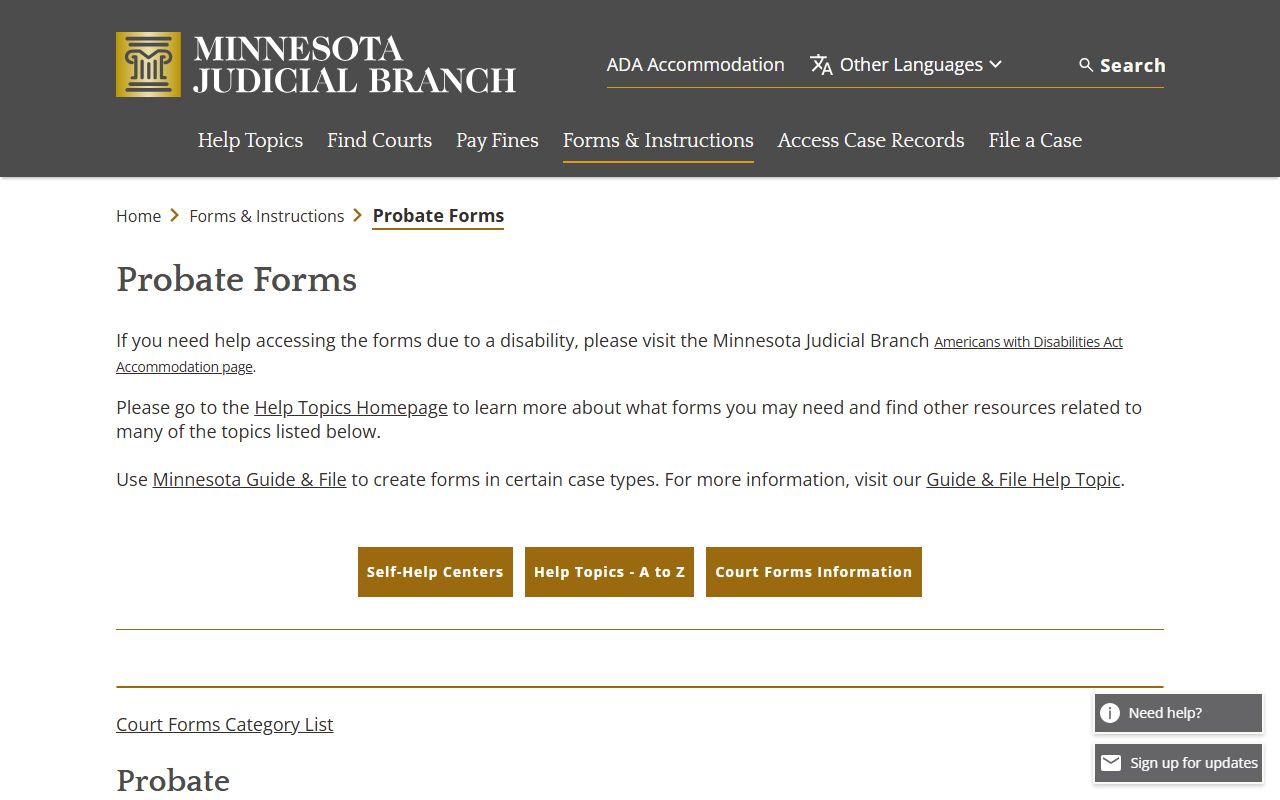
Those official forms support Lac qui Parle County probate filings because the local probate division uses Minnesota Judicial Branch forms and District Court procedures.
Lac qui Parle County Small Estate Records
The small-estate affidavit is the main probate caveat in the research. The Judicial Branch FAQ says the Affidavit for Collection of Personal Property can be used directly with the holder of property and does not get filed with the court. That means a person may use a Minnesota small-estate affidavit for qualifying personal property without creating a Lac qui Parle County probate case in MCRO.
Minn. Stat. section 524.3-1201 governs the small-estate affidavit procedure for collection of personal property. The research also points to the official small-estate forms packet. If real estate is involved, if there is a dispute, or if letters or court orders are needed, a court probate filing may still be required. The Land Records Office may also become relevant if a probate outcome creates a deed or recorded real estate document.
The Probate FAQ image below comes from Minnesota probate wills and estates FAQs.
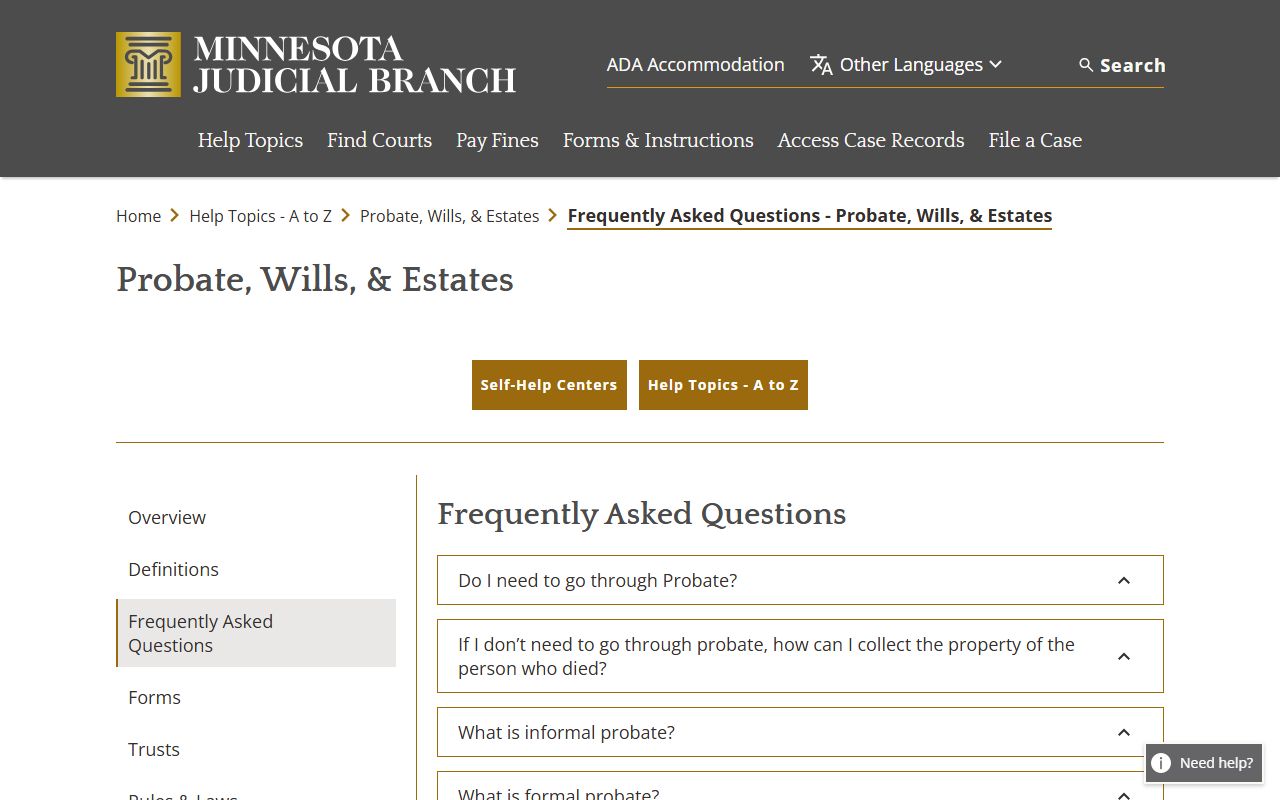
The FAQ is important for Lac qui Parle County probate searches because a valid small-estate affidavit may leave no court docket to find.
Lac qui Parle County Probate Packet Use
The small-estate forms packet is a practical source when the estate involves personal property and no real estate. It should be used with care because the affidavit is presented to the holder of the property, not filed to start a District Court case. If a bank, agency, or other holder requires court letters or a certified order, the small-estate affidavit may not be enough.
The official packet is shown in the assigned image from the Affidavit for Collection of Personal Property small-estate forms packet.
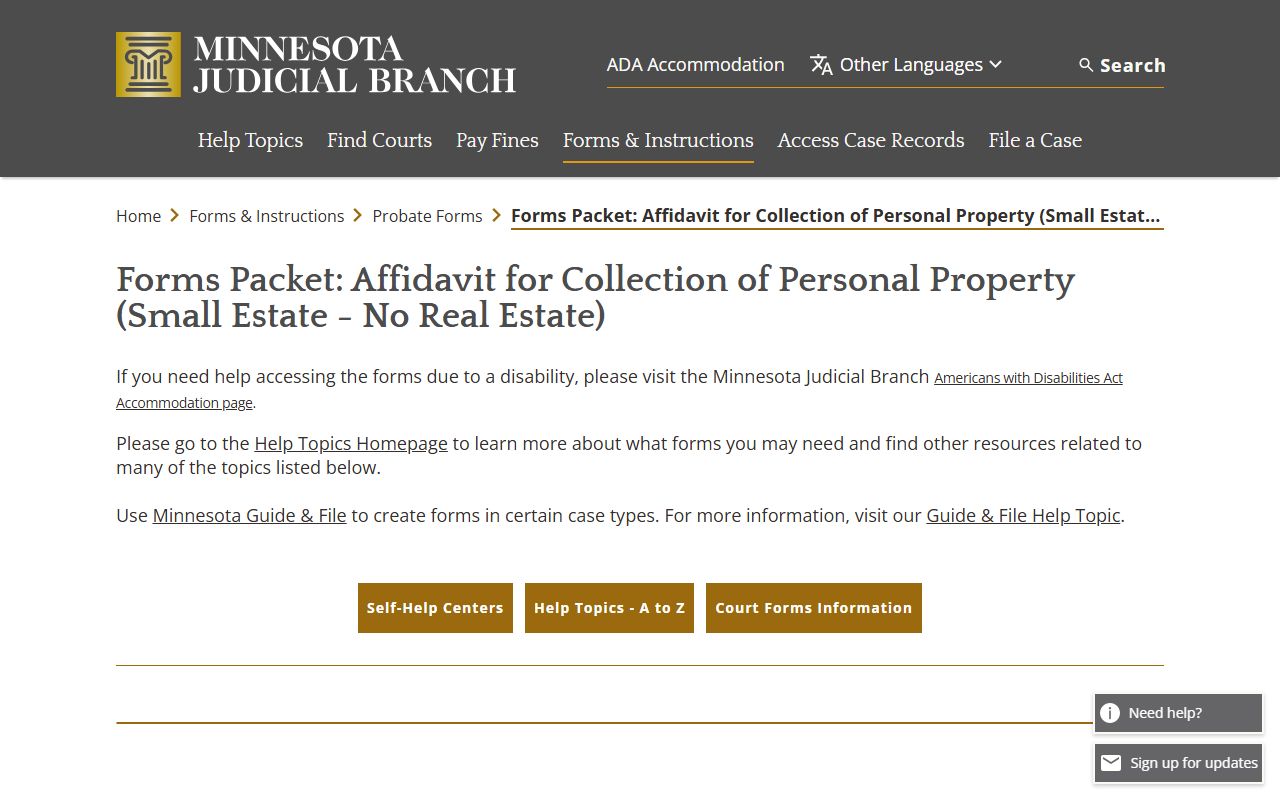
That packet supports a non-court route for some Lac qui Parle County estate matters, which is why MCRO may not show every estate-related transfer.
Lac qui Parle County Probate Fees
Probate filing and copy charges should be checked through the Minnesota District Court fee catalog and local Court Administration. The research does not provide a final Lac qui Parle probate filing total, and the instructions prohibit inventing one. The reliable local answer is to use the Judicial Branch fee page and confirm the current county-calculated total before filing or ordering certified copies.
| Item | Amount or Source |
|---|---|
| Probate filing fee | Use the Minnesota District Court fee catalog and confirm with Court Administration. |
| Certified probate order or letters | Request from Court Administration and confirm copy charges. |
| Older or non-online probate documents | Contact Court Administration because MCRO document access is limited for older filings. |
| Real estate recording after probate | County Land Records fees may apply if probate results in a deed or recorded document. |
| Non-plat certified real estate record copy | $10.00 each under the county fee schedule, when a Land Records copy is needed. |
The official small-estate statute appears in the assigned image from Minn. Stat. section 524.3-1201.
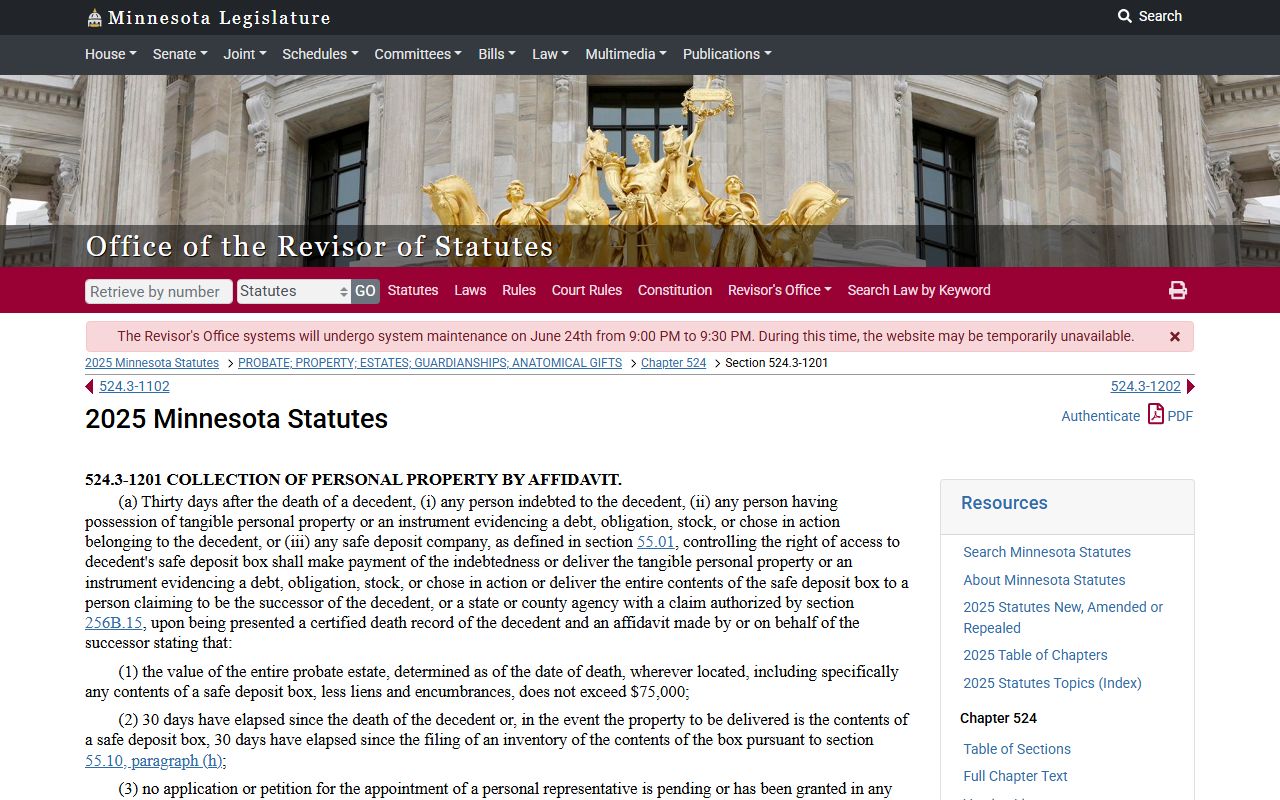
That statute is tied to probate fees because a qualifying small-estate affidavit may avoid a court filing fee entirely.
What Lac qui Parle County Probate Records Show
A public estate file may show the application or petition, will, appointment of a personal representative, creditor notices, claims, inventory, accounting, orders, and closing documents. A guardianship or conservatorship file may show petitions, orders appointing a guardian or conservator, annual reports, and accounts. Trust matters and demands for notice can also appear as probate-related District Court records.
| Field or Document | What It Shows |
|---|---|
| Case number | The District Court probate file number, often using the 37 county prefix and PR case code. |
| Decedent or protected person | The person whose estate, guardianship, or conservatorship is at issue. |
| Personal representative or fiduciary | The person seeking or holding authority to act for the estate or protected person. |
| Register of actions | The chronological court event list, including filings, hearings, and orders. |
| Public documents | Available probate documents posted under MCRO and access rules. |
| Certified orders or letters | Official court copies requested from Court Administration. |
Lac qui Parle County Probate Access Limits
Probate estate files are often public, but probate-adjacent protected-person cases can include restricted material. Guardianship, conservatorship, and mental-health-related filings may contain medical reports, functional assessments, financial account data, addresses, and private data. Rule 4 of the Minnesota Rules of Public Access lists categories that are not publicly accessible, and Rule 8 limits remote access and copying in some circumstances.
MCRO is not the official certified record and does not certify search results. Public courthouse terminals may show public records not available remotely, and certified probate copies must come from Court Administration. Older documents may also require local court help because MCRO access to older filings is limited. When a probate matter affects a real estate deed, the related recorded document may be a Land Records record rather than a probate docket document.
Note: A sealed guardianship exhibit may be withheld even when the main probate case number is visible.