
Lac qui Parle Criminal Court Records
A criminal court record in Lac qui Parle County begins when a prosecutor files a criminal complaint or related charging document with Lac Qui Parle County District Court. The record is then kept by Court Administration at the courthouse in Madison. It is the case-level file, not just a law-enforcement incident, jail booking, or background-check entry. It can include the charging document, the register of actions, hearing notices, court orders, plea entries, trial results, sentencing terms, fines, restitution, probation conditions, and public documents tied to the case.
Minnesota has no county court, justice court, or municipal trial-court layer for Lac qui Parle County case files. District Court is the local trial court for criminal, traffic, civil, family, probate, and juvenile cases filed in the county. The Eighth Judicial District has an administrative role across western Minnesota counties, but it does not create a separate local records counter for Lac qui Parle criminal court records. For the charge list before outcome, use the court case file and the separate Lac qui Parle County arrest records and court charges page. For the wider civil, family, probate, and judgment search path, use the general Lac qui Parle County court records page.
The Lac qui Parle County Attorney's Office is the local prosecutor for adult county-level criminal cases. The office is at 214 6th Avenue in Madison, and the published phone number is 320-598-7578. The County Attorney decides what charges are filed after investigation, while the District Court maintains the public case file after filing.
The County Attorney's Office source helps anchor the criminal filing path to the local prosecutor rather than to a generic statewide office.
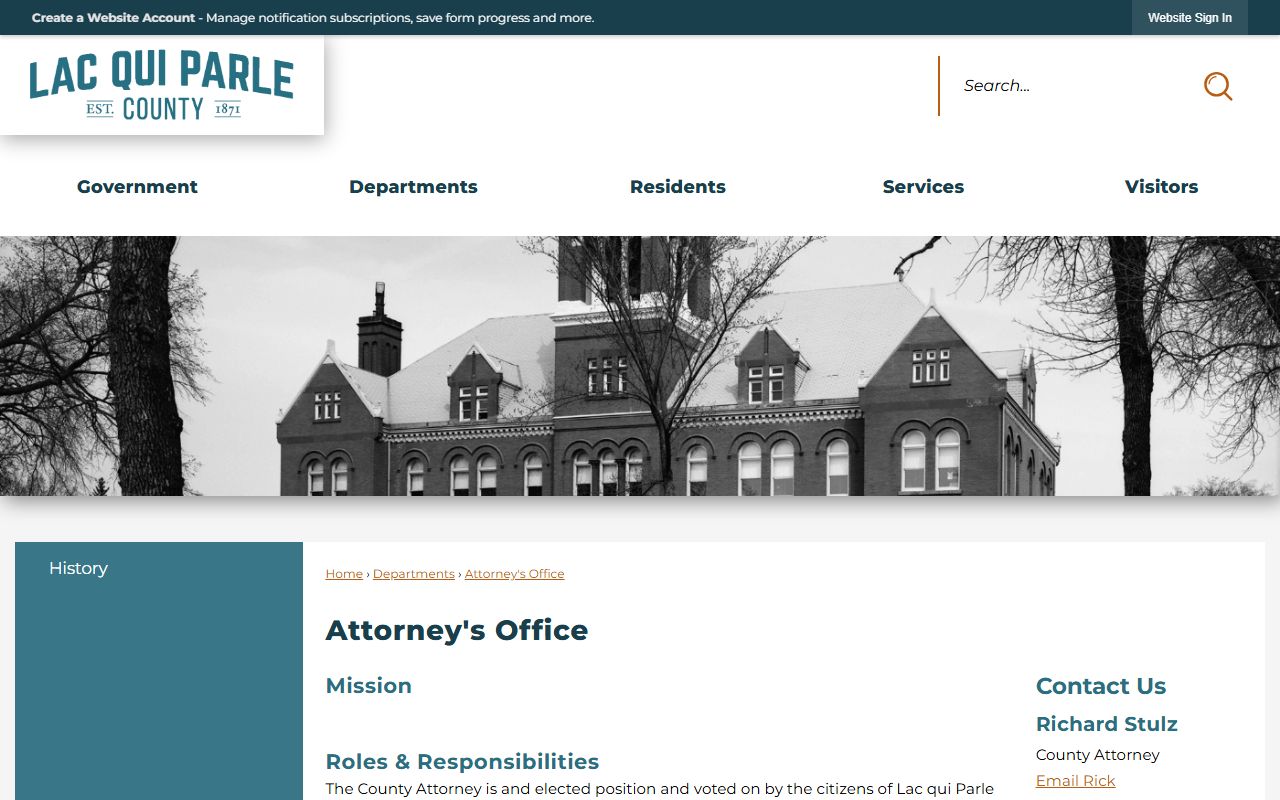
That local role matters because criminal court records show the charges filed in Lac qui Parle County District Court, not every police contact or jail intake event.
Search Lac qui Parle Criminal Records
The main online path is Minnesota Court Records Online Case Search, known as MCRO. MCRO covers Minnesota District Court case records statewide, including Lac qui Parle County. Case Search can search by name, business name, attorney, case number, citation number, or attorney bar number. A case-number search is best when available because MCRO warns that name searches can miss or limit some pending criminal and traffic matters. Pending criminal, traffic, and petty misdemeanor cases with no conviction may not appear by defendant-name search, though they may still return by case number.
- Open MCRO Case Search and accept the terms if prompted.
- Choose Case Number when known, or use a person-name search with the Lac Qui Parle county filter.
- Select Criminal or use date-filed and case-status filters if statewide results are too broad.
- Open the case details and read the Register of Actions, charge entries, hearings, and available documents.
- For certified copies, contact Lac Qui Parle County District Court because MCRO printouts are not certified court records.
Court Administration is the certified-copy route for Lac qui Parle County criminal court records. The court is at 600 Sixth Street, Madison, MN 56256, with phone (320) 295-4000 and fax (320) 598-3915. MCRO may show many public documents, but documents filed before July 1, 2015 can be limited online, and courthouse terminals may show public records that are not remotely available. Certified copies and civil judgment search results must come from local court administration.
Lac qui Parle Criminal Case Flow
Criminal court records grow as each event is filed or held. The first visible entry may be the complaint or citation, but later entries show hearings, motions, pleas, orders, sentencing, and financial terms. A single Lac qui Parle County criminal case can have more than one charge, and each charge can have its own status. That is why the case file must be read as a timeline rather than as a one-line criminal-history result.
Case flow: Charges Filed › Arraignment › Pretrial / Motions › Plea or Trial › Disposition › Sentencing
| Stage | What the Lac qui Parle Record Shows |
|---|---|
| Charges Filed | The prosecutor's complaint or other charging paper, offense level, statute, and first case events. |
| Arraignment | The first appearance or plea stage, including hearing date, judicial officer, and defendant response. |
| Pretrial / Motions | Omnibus issues, continuances, motions, orders, and notices before plea or trial. |
| Plea or Trial | Guilty plea, not-guilty plea, verdict, dismissal, or other charge-by-charge outcome. |
| Sentencing | Jail or prison terms, probation, fines, costs, restitution, and conditions when imposed. |
Note: A court event can be public while a document tied to that event is not available online under remote-access rules.
Lac qui Parle Criminal Record Fields
A Lac qui Parle County criminal court record uses Minnesota District Court fields. Local case numbers commonly begin with county number 37, followed by the case-type code, year, and sequence number. The Register of Actions is the chronological list of events. It is the best place to see how the criminal court record changed over time and whether a charge ended in conviction, dismissal, amendment, or sentencing.
| Field | What It Shows |
|---|---|
| Case number | County prefix, case type, filing year, and sequence, such as the 37 county prefix used in Lac qui Parle examples. |
| Case category | Criminal, traffic/petty, juvenile, or another District Court category tied to the filing. |
| Parties | Prosecutor and defendant names, with attorney information when present. |
| Charges | Offense name, statute, severity, current charge status, and amendments when entered. |
| Hearings | Date, time, hearing type, judicial officer, location, and connection type if posted. |
| Disposition | Dismissed, guilty, not guilty, acquitted, amended, stayed, or other outcome shown by charge. |
| Sentence | Jail, prison, probation, fines, restitution, court costs, and other court-ordered terms. |
| Documents | Public complaints, orders, notices, and other filings when MCRO remote access permits them. |
The Minnesota expungement petition statute is one of the sources used for criminal-record sealing content because it explains the court petition path when automatic relief does not apply.
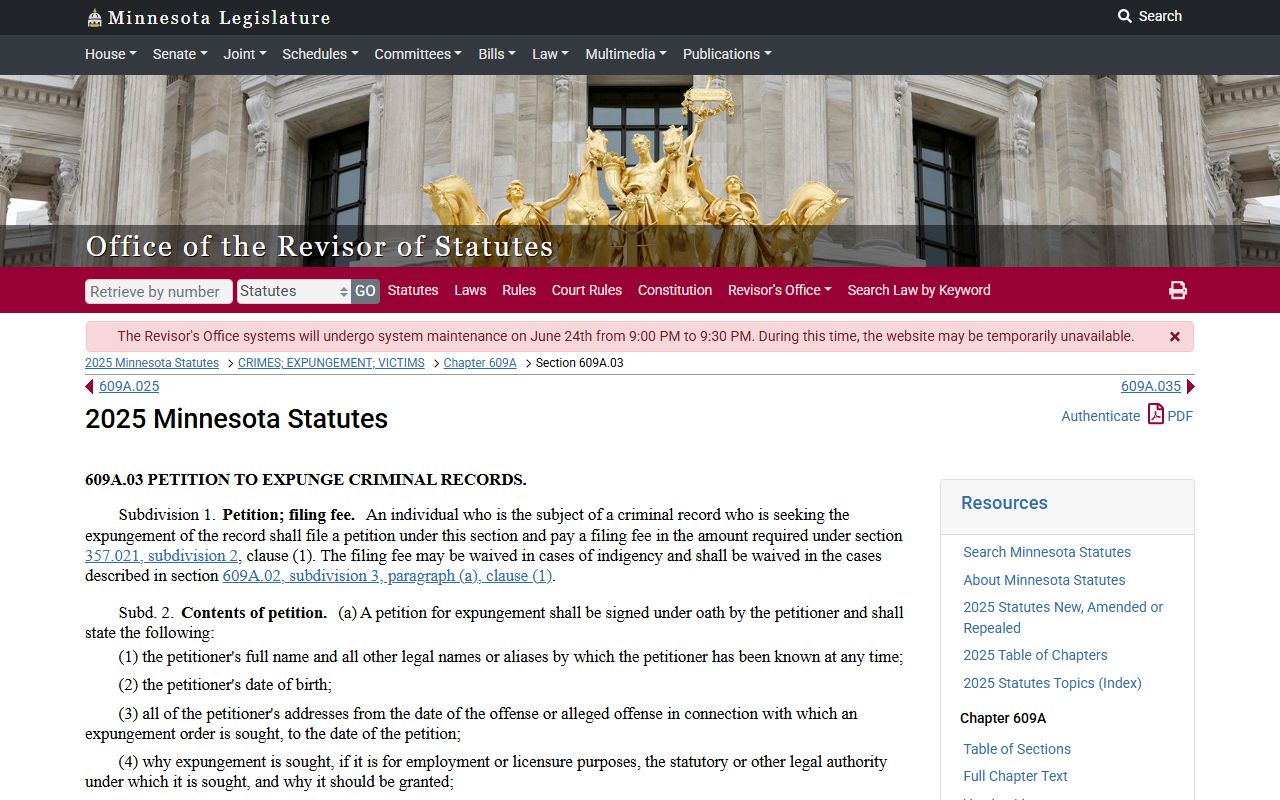
Expungement is a later court process, so users should read the current case outcome before assuming a past criminal court record has been sealed.
Lac qui Parle Charges vs Convictions
A charge is an accusation filed by the prosecutor. A conviction is an outcome after a guilty plea, verdict, or other court action that results in a finding of guilt. Lac qui Parle County criminal court records can show charges that were dismissed, reduced, amended, or never became convictions. This distinction is central when reading a criminal court file, a jail roster charge line, or a BCA public criminal-history result.
| Point | Charge | Conviction |
|---|---|---|
| Meaning | Formal accusation filed in District Court. | Final or current finding of guilt on a charge. |
| Where seen | Complaint, charge tab, docket events, and some custody records. | Disposition, sentence, BCA public conviction history, and later court events. |
| Can change | May be amended, reduced, dismissed, or dropped. | May be appealed, stayed, corrected, or later sealed if eligible. |
| How to verify | Read the charge line and later Register of Actions entries. | Read the disposition and sentencing entries for that same charge. |
Reading Lac qui Parle Dispositions
Disposition is the court-record term for the outcome of a case or charge. It may show guilty, dismissed, acquitted, continued for dismissal, stayed, or another case-specific result. Sentence is different. Sentence describes what the court ordered after conviction, such as jail time, probation, fines, fees, restitution, or other conditions. In Lac qui Parle County criminal court records, a reader should pair each charge with its disposition before relying on the file for any conclusion.
The Minnesota Clean Slate automatic expungement statute is relevant after disposition because eligible records may later be reviewed for automatic sealing.
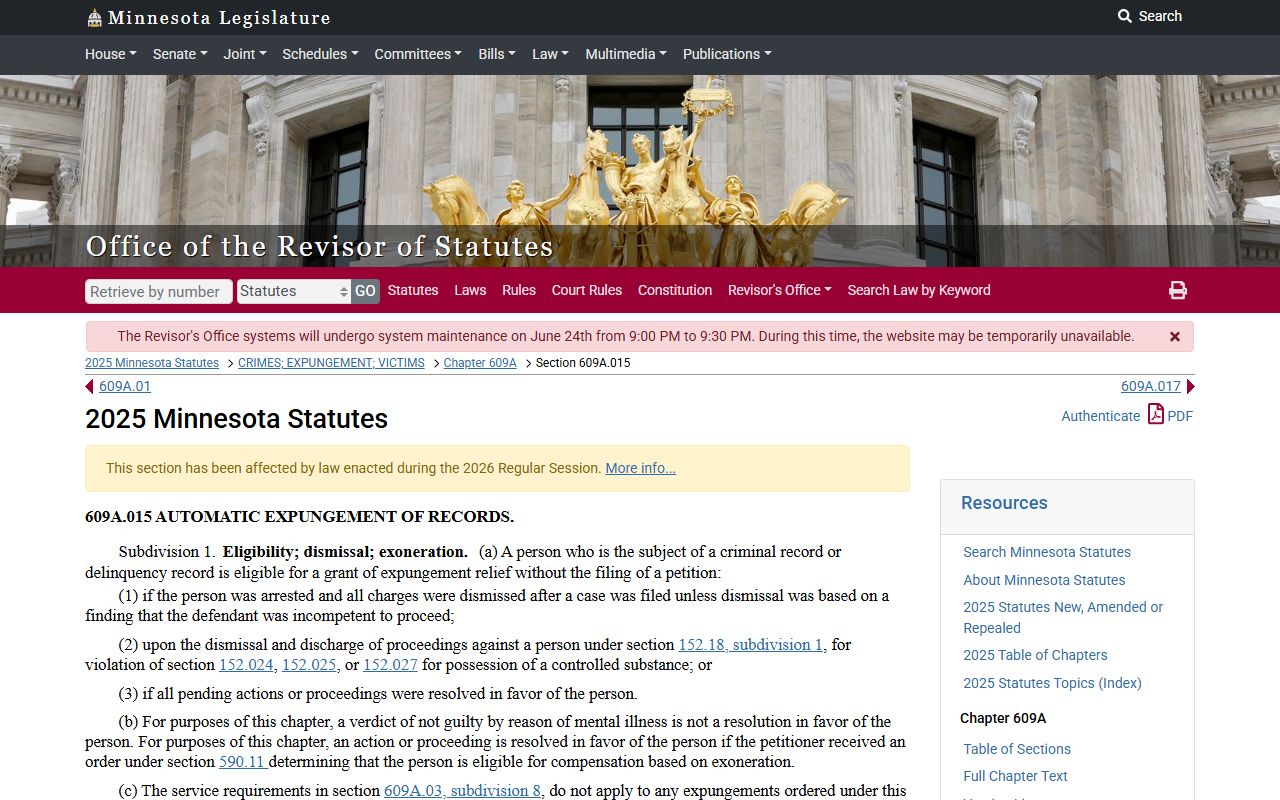
Clean Slate does not turn every case invisible at once; agencies and courts follow an eligibility and review process.
Lac qui Parle Sealed Criminal Records
Sealed and expunged criminal court records are restricted from normal public access, but Minnesota uses precise rules. Expungement generally means sealing records from public disclosure, not always destroying every record held by every agency. The subject of a record may still need copies before sealing for immigration, licensing, employment, or personal legal reasons. Public access can also differ between MCRO, courthouse terminals, BCA criminal history, and local law-enforcement data.
| Point | Sealed | Expunged |
|---|---|---|
| Public view | Hidden or limited for the public. | Sealed from public access when relief applies. |
| Agency access | Some agencies may retain access by statute or court order. | Agency access can remain for specified purposes. |
| How it occurs | By court rule, statute, or order. | By automatic Clean Slate review or petition under Minnesota law. |
| Lac qui Parle route | Check MCRO and ask Court Administration for public-access status. | File or confirm through District Court if the case belongs in Lac qui Parle County. |
The Minnesota expungement eligibility statute is a separate source because not every offense or conviction is eligible for relief.
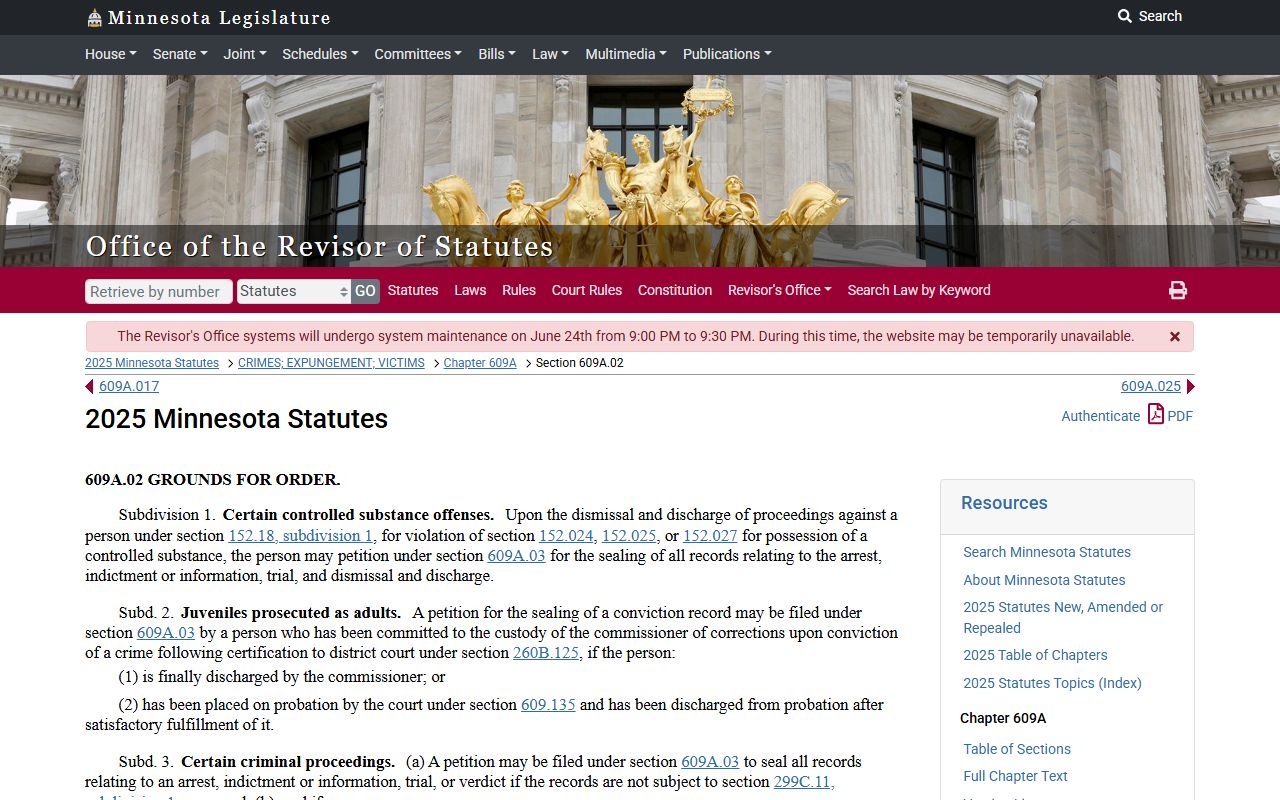
Eligibility limits are why a Lac qui Parle County criminal court record should be reviewed case by case rather than judged from a charge title alone.
Lac qui Parle Criminal Public Access
For court files, Minnesota Rules of Public Access to Records of the Judicial Branch control what the public can inspect and what can be viewed remotely. Rule 8 governs inspection, copying, bulk access, and remote limits. Rule 4 lists records and document categories that are not public. For sheriff or county executive data outside the court file, the Minnesota Government Data Practices Act is the public-records framework. The two systems overlap in criminal matters, but they are not the same records office.
Key access sources:
Minnesota Rule of Public Access 4 identifies nonpublic court-record categories, including many juvenile, commitment, and sealed materials.
Minnesota Rule of Public Access 8 explains inspection, copying, remote access, and limits on online court records.
Minn. Stat. section 13.87 governs public criminal-history access through the BCA rather than the court case file.
The BCA public criminal history home page is useful for conviction history, but it is not a replacement for Lac qui Parle County criminal court records.
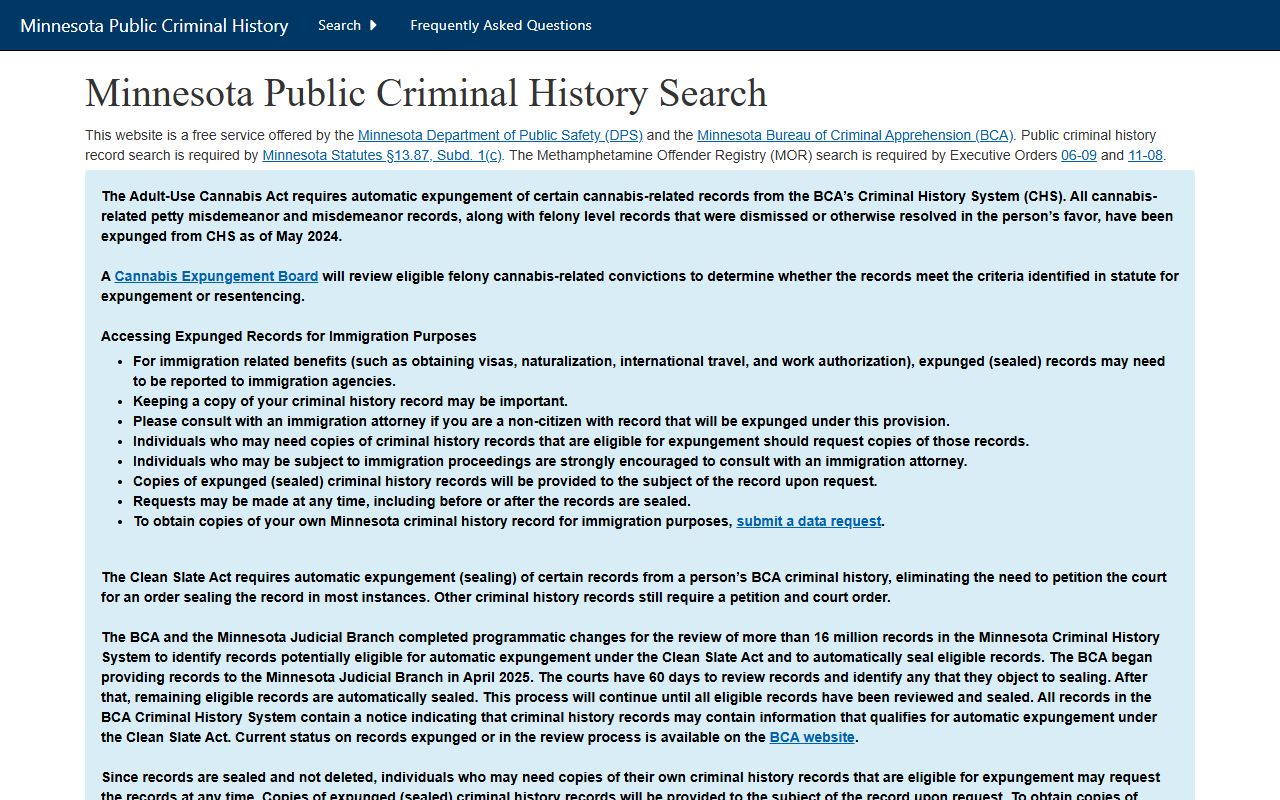
BCA results can help confirm public conviction history, while MCRO and Court Administration remain the case-file sources for hearings and court documents.
Lac qui Parle Background Checks
Background checks should not be built from a single criminal court search. MCRO is not the official certified record, and the State Court Administrator's Office does not certify MCRO search results. BCA criminal history is a separate statewide system that focuses on public conviction history. Employers, landlords, insurers, and others using records for regulated decisions must use legally compliant screening channels and verify the correct person, case, and disposition.
Important: Criminal court lookup results are not consumer reports and should be verified with the originating public office.
The BCA criminal-history search form requires identifying fields for a public criminal-history search.
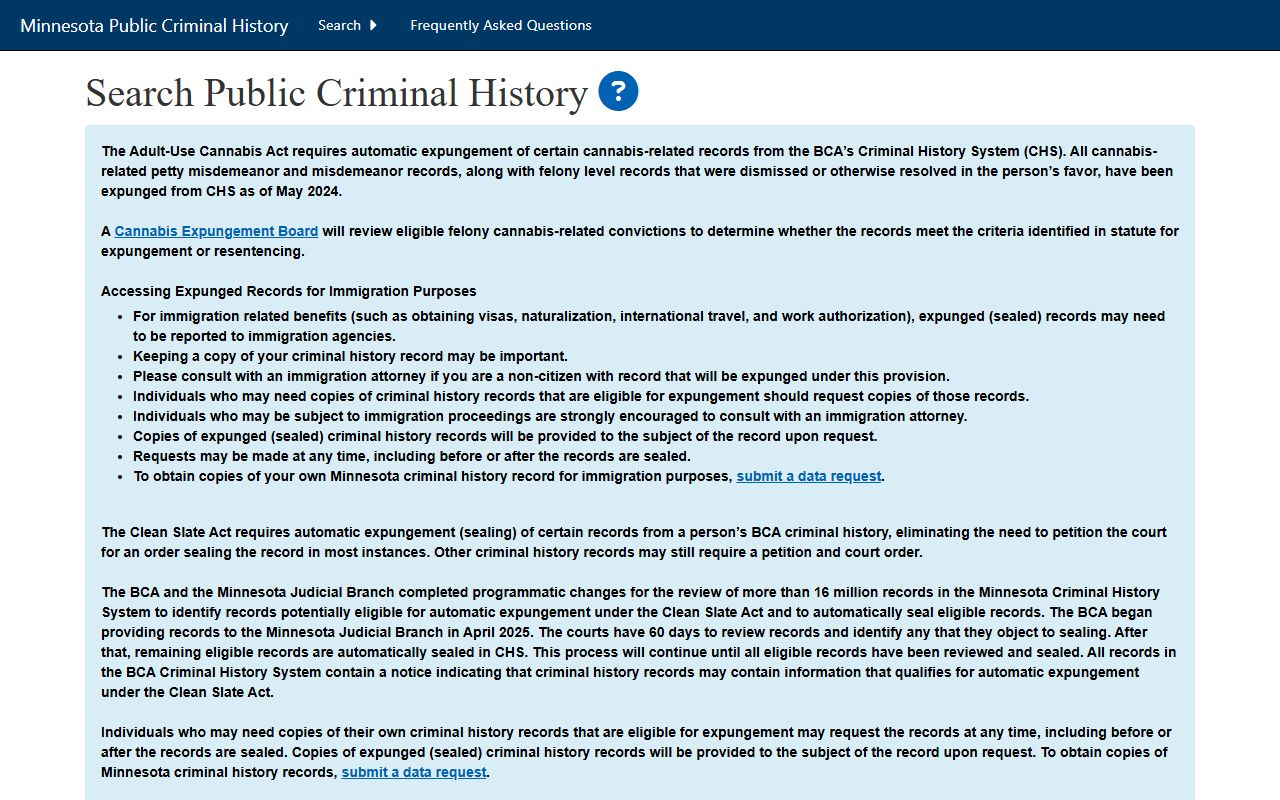
Use BCA for the statewide conviction-history lane and MCRO for the Lac qui Parle County criminal court case lane.
Restricted Lac qui Parle Criminal Records
Some Lac qui Parle County criminal court records are public only in part. Juvenile records are restricted under Minnesota law except where a statute or rule makes a proceeding public. Sealed and expunged records are not available through ordinary public searches. MCRO also limits remote access to some pending criminal, traffic, and petty misdemeanor cases when searched by defendant name if there is no conviction. Public documents in older cases or restricted case types may require a courthouse terminal or a direct question to Court Administration.
Redactions also matter. Social Security numbers, financial account numbers, party street addresses, medical records, minor information, and private law-enforcement data can be removed or withheld. If the record is needed for court, licensing, immigration, or another formal purpose, request the certified copy or access answer from Lac Qui Parle County District Court rather than relying on a screen print.