
Lac qui Parle Arrest Records
Lac qui Parle County arrest records and court charge records come from different offices. The Sheriff's Office investigates crimes, makes arrests, operates the county jail, serves civil process, and enforces court orders and warrants. The arrest or booking side can appear on the county in-custody list when a person is held in the jail. The court charge side begins when the Lac qui Parle County Attorney files charges in District Court. That court filing is where charge names, statute numbers, severity levels, amendments, hearings, and outcomes are tracked.
The local prosecutor is the Lac qui Parle County Attorney's Office, headed by County Attorney Richard Stulz. The office address is 214 6th Avenue, Madison, MN 56256, and the published phone number is 320-598-7578. The Sheriff may arrest or investigate, but the County Attorney decides the formal adult criminal charges filed in Lac qui Parle County District Court. For the full case file after charges are filed, use Lac qui Parle County criminal court records. For current custody details, use Lac qui Parle County inmate records.
The Minnesota Government Data Practices Act access section is relevant to sheriff and county data requests outside the court file.
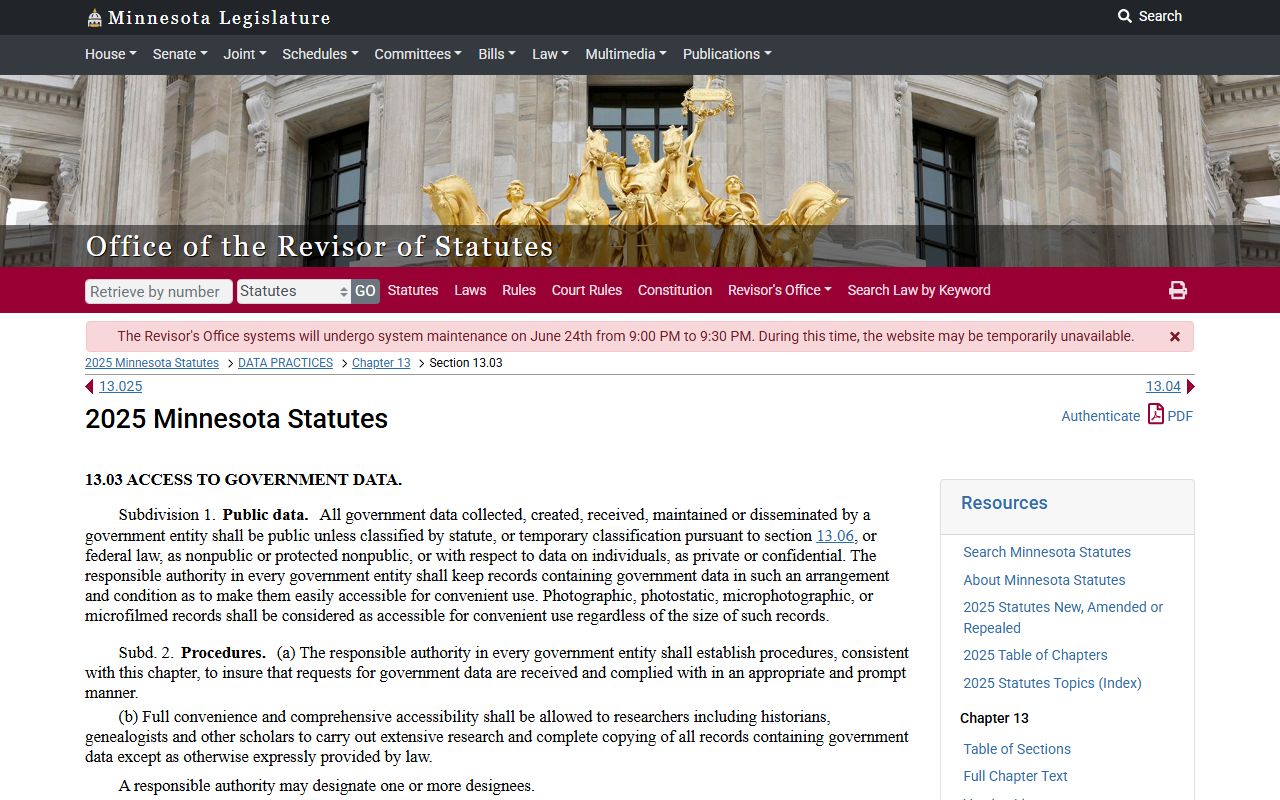
That distinction helps separate sheriff data requests from District Court charge records filed after arrest.
Find Lac qui Parle Arrest Charges
Start with the court record when the goal is to verify court charges after arrest. MCRO Case Search is the statewide Minnesota District Court search portal for Lac qui Parle County charges once a case is filed. Search by case number when known. If only a name is available, choose the Lac Qui Parle county filter and review criminal or traffic/petty results with care. Pending criminal and traffic matters with no conviction may be limited in name searches, so case number remains the stronger lookup key.
- Open MCRO Case Search and search by case number, citation number, or defendant name.
- Use the Lac Qui Parle county filter to reduce statewide false matches.
- Open the case and review each charge line for statute, level, and current status.
- Read later Register of Actions entries to see whether a charge was amended, dismissed, or sentenced.
- For current custody, compare the court case with the county in-custody list rather than treating either record as complete by itself.
The county's In Custody List is a live roster table, not a searchable arrest-record database. It displays current detainees and charge/status lines when a person is in custody. It does not replace the court charge record because a custody entry may not show later amendments, dismissals, pleas, or sentencing.
Court Charges After Arrest
After an arrest in Lac qui Parle County, the prosecutor reviews investigation facts and decides whether to file charges in District Court. Minnesota criminal cases commonly begin with a complaint in county-level prosecutions. Complaint, information, and indictment are distinct charging papers, but the practical local path is that the County Attorney files adult criminal charges in Lac qui Parle County District Court. The charging paper is the bridge from an arrest record to the court charge record.
| Charging paper | Who uses it | How it relates to Lac qui Parle charges |
|---|---|---|
| Complaint | Prosecutor, often based on law-enforcement reports. | Common Minnesota District Court charging document for adult criminal cases. |
| Information | Prosecutor. | A formal prosecutor-filed charge document where allowed by procedure. |
| Indictment | Grand jury. | Used for serious matters when grand-jury charging is required or chosen. |
Note: The research did not locate a Lac qui Parle-specific online complaint form or prosecutor filing portal for public use.
Lac qui Parle Charge Status
A charge can change after the first court filing. It may be amended to a different statute, reduced to a lower severity, dismissed, or resolved through a plea or verdict. The in-custody list may show a current charge/status line, but MCRO and Court Administration are the better sources for later court action. A reader should match the charge line to later disposition entries before treating the charge as an outcome.
| Status | What It Means |
|---|---|
| Pending | The charge has been filed and no final charge-level outcome is shown yet. |
| Amended | The prosecutor or court record shows a changed statute, offense, or severity. |
| Reduced | The charge moves to a lower offense level or different count as part of case handling. |
| Dismissed | The charge is ended without a conviction on that count. |
| Sentenced | The charge resulted in a sentence after conviction or plea, as shown in the case record. |
Lac qui Parle Charges vs Convictions
Being charged is not the same as being convicted. Lac qui Parle County arrest records can reflect why a person was booked or held, while court charge records show what the prosecutor filed. A conviction appears only if a charge results in a guilty plea, guilty verdict, or other court action that creates a finding of guilt. This is why the BCA criminal-history search and MCRO case search serve different purposes.
| Point | Charge | Conviction |
|---|---|---|
| Record stage | After prosecutor filing. | After plea, verdict, or other finding. |
| What it proves | An allegation was filed in court. | A court outcome found guilt on that charge. |
| Can appear in custody data | Yes, if the person is held on that charge or status. | Yes, if sentenced or held after conviction. |
| Best source | MCRO case file and Court Administration. | MCRO disposition, sentencing entry, and BCA public conviction history. |
The Minnesota criminal-history data statute explains BCA public internet access to public criminal-history data.
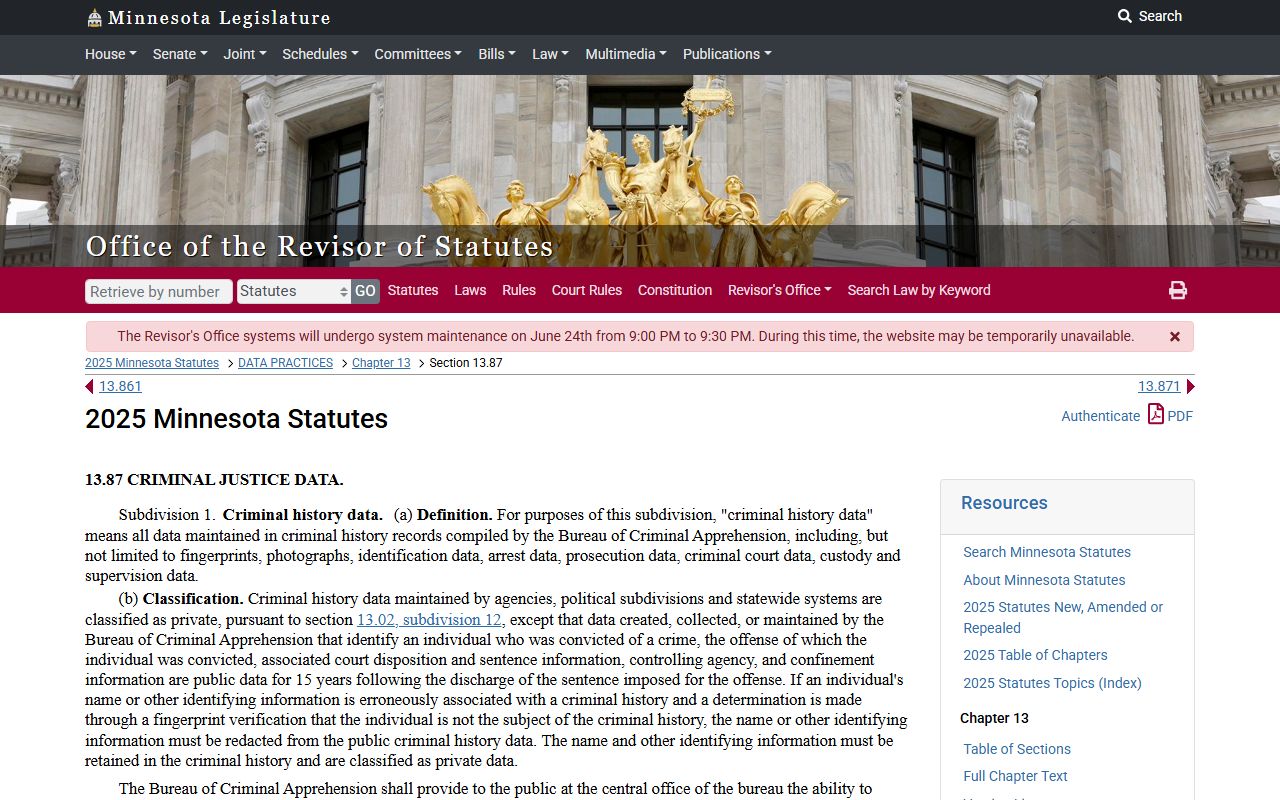
That source supports the statewide criminal-history lane, while the Lac qui Parle District Court file remains the charge-by-charge case lane.
Lac qui Parle Charge Access Rules
Public access to arrest records and charge records depends on which record is being requested. Court charge records are governed by Minnesota Judicial Branch access rules. Sheriff and county law-enforcement data are governed by state government-data law, subject to investigative, private, confidential, sealed, juvenile, and other limits. A public court event may be visible while a document is not available remotely, and a sheriff record may be partly public while private data is withheld.
Access sources:
Minnesota Rules of Public Access organize the court-record rules used for District Court case access.
Rule 4 lists court records and document categories that are not accessible to the public.
Rule 8 controls inspection, copying, remote access, and bulk distribution of court records.
The Rules of Public Access table of contents is the broad source for Minnesota court-record access.
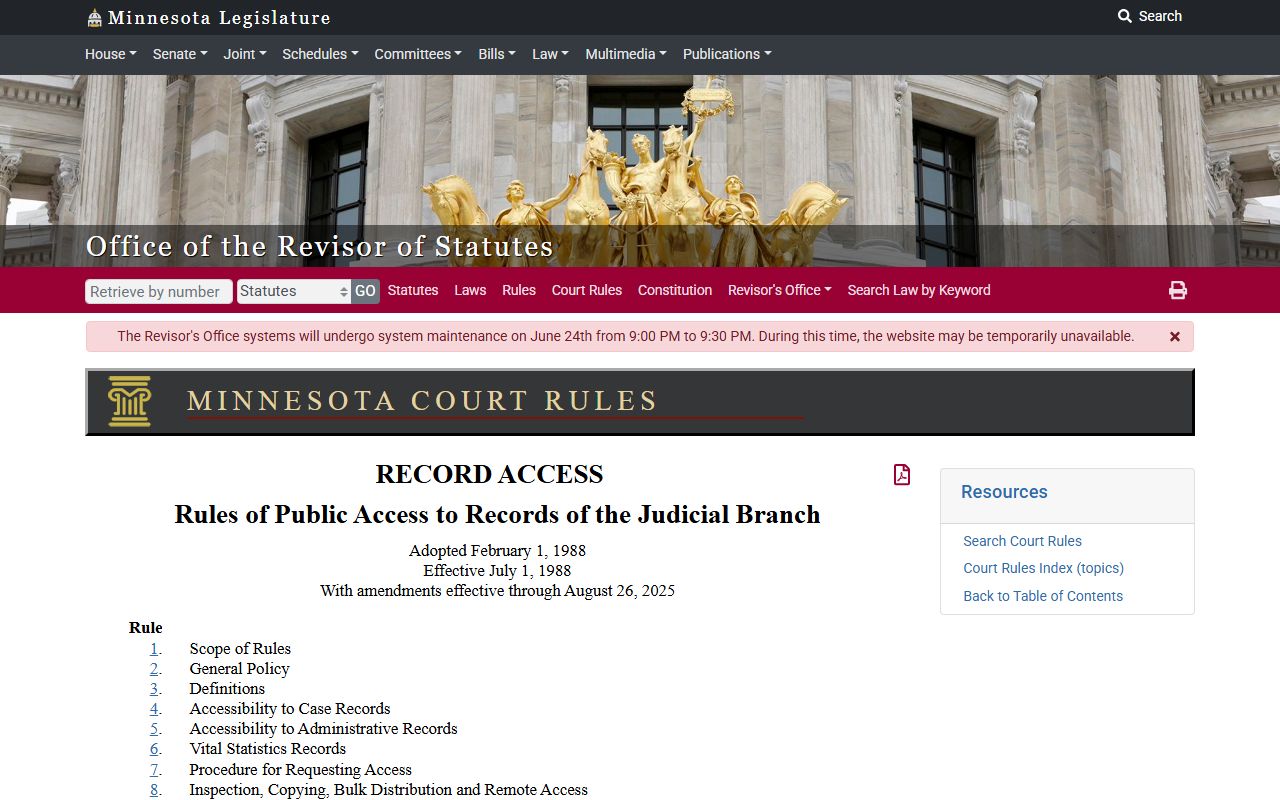
Those rules explain why a Lac qui Parle charge may be visible in one search path but not fully downloadable online.
Lac qui Parle Charge Codes
Charge lines can include severity, status, statute, and offense description. The Lac qui Parle in-custody roster has shown entries such as a gross-misdemeanor DWI statute line and a felony firearm/ammunition statute line. Those roster entries are useful clues, but the filed court case is the place to confirm whether the prosecutor kept, amended, reduced, or dismissed the charge.
- Charge
- The specific offense alleged by the prosecutor.
- Statute
- The Minnesota law section tied to that offense.
- Disposition
- The outcome of a charge, such as guilty, dismissed, or acquitted.
- Sentence
- The court order imposed after conviction, such as jail, probation, fines, or restitution.
The Rule 4 source is tied to limits on public court access for nonpublic categories.
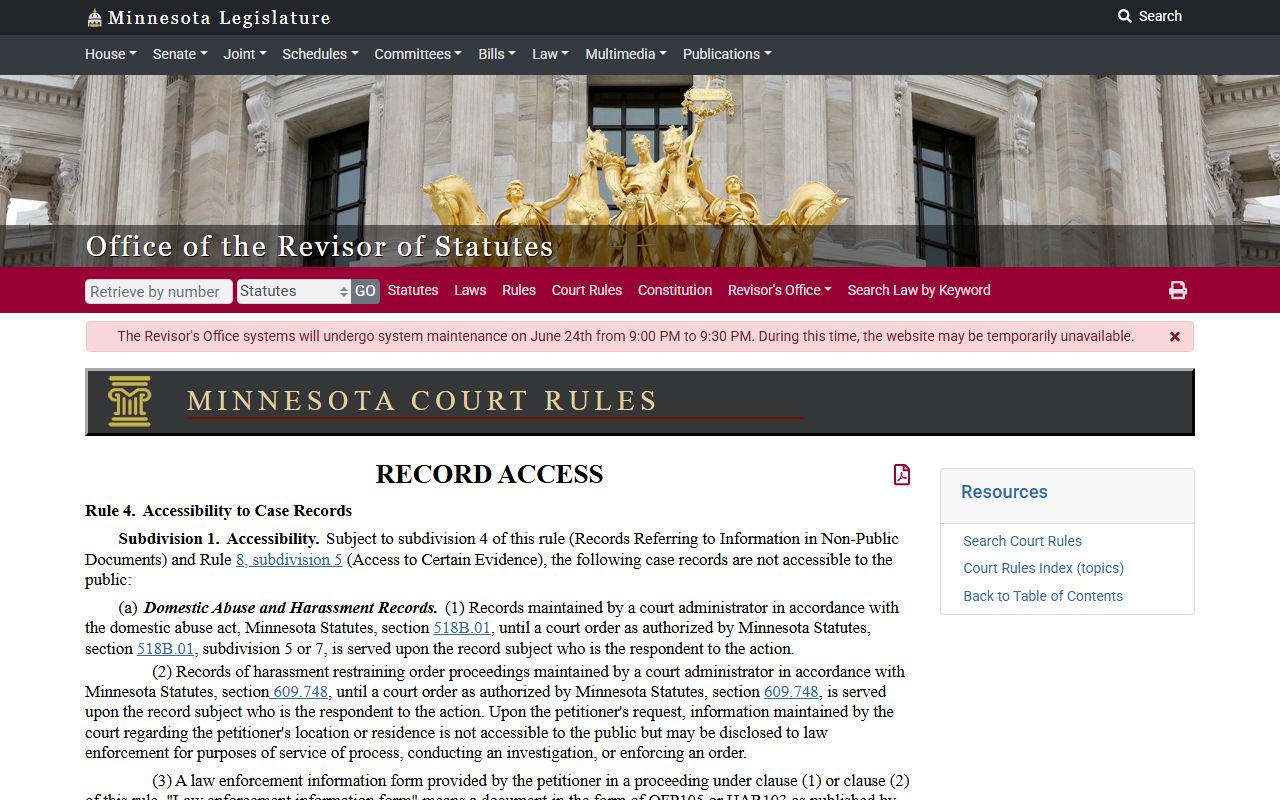
Rule 4 is especially important when a charge involves juvenile, sealed, commitment, or other restricted material.
Lac qui Parle Sealed Charges
A charge may disappear from normal public view if a record is sealed, expunged, or otherwise restricted. Expungement seals records from public disclosure, but it does not always erase every agency record for every purpose. Minnesota's Clean Slate process and petition-based expungement rules can affect court records, BCA criminal history, and local agency records in different ways. Juvenile charge records are also treated differently from adult records.
| Point | Sealed | Expunged |
|---|---|---|
| Public display | Removed or blocked from ordinary public access. | Sealed from public disclosure when relief applies. |
| How it happens | By rule, statute, or court order. | By automatic review or petition under Minnesota expungement law. |
| Agency use | May remain available to authorized agencies. | May remain available where statute or order allows. |
| Practical check | Ask Court Administration if the case is not visible. | Confirm whether the court, BCA, and local agency records were all affected. |
The Rule 8 inspection and remote-access source supports the difference between courthouse access, copies, and online access.
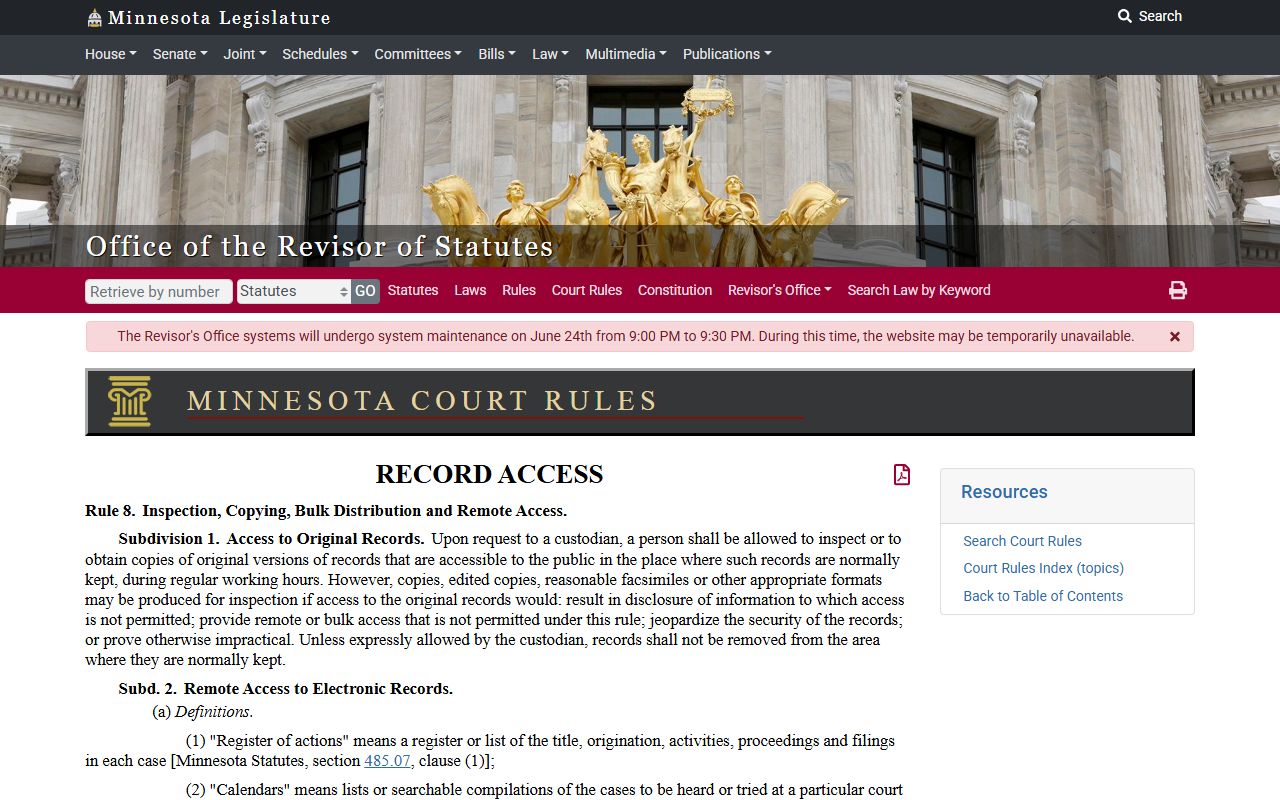
Remote limits matter because a charge record can be public at the courthouse even when it is not shown fully in an online search.
Restricted Lac qui Parle Arrest Records
Restricted records are common in the arrest-to-charge path. Active investigations, sealed warrants, private data, juvenile matters, confidential informant information, medical details, and victim-protection data may be withheld from a sheriff data request. Court files can also redact personal identifiers, financial account numbers, street addresses, minor information, and nonpublic filings. MCRO may limit pending criminal and traffic cases without conviction by name search.
The Minnesota juvenile records statute is the key source for juvenile charge limits.
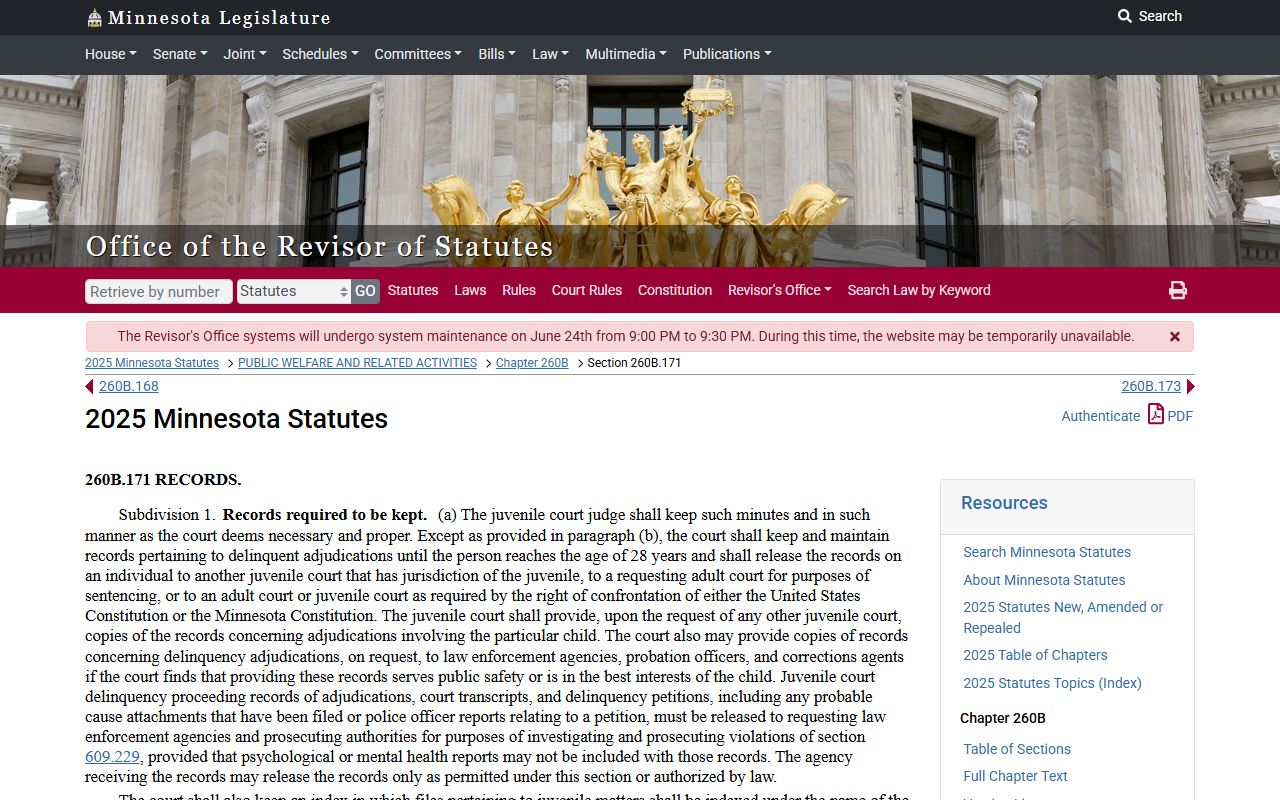
Juvenile limits are why adult Lac qui Parle County arrest records and charges should not be treated as a model for every age group.
Statewide Arrest and Charge Checks
The BCA public criminal-history search is the statewide route for public conviction history. It is not a live warrant search, not a full Lac qui Parle County court docket, and not a current jail roster. MCRO is the better source for District Court charges, hearings, and dispositions. The Sheriff's Office is the local source for custody confirmation, jail limits, and public sheriff data requests under Minnesota data law.
Important: Do not use a charge line alone as proof of conviction; verify disposition and sentence in the court file.